The Ultimate Guide to the Weather in Las Palmas de Gran Canaria
What's the weather really like in Las Palmas de Gran Canaria, how do the seasons differ, when's hottest and what's the best time of year to visit? The Ultimate Guide to the Weather in Las Palmas de Gran Canaria has all the answers.
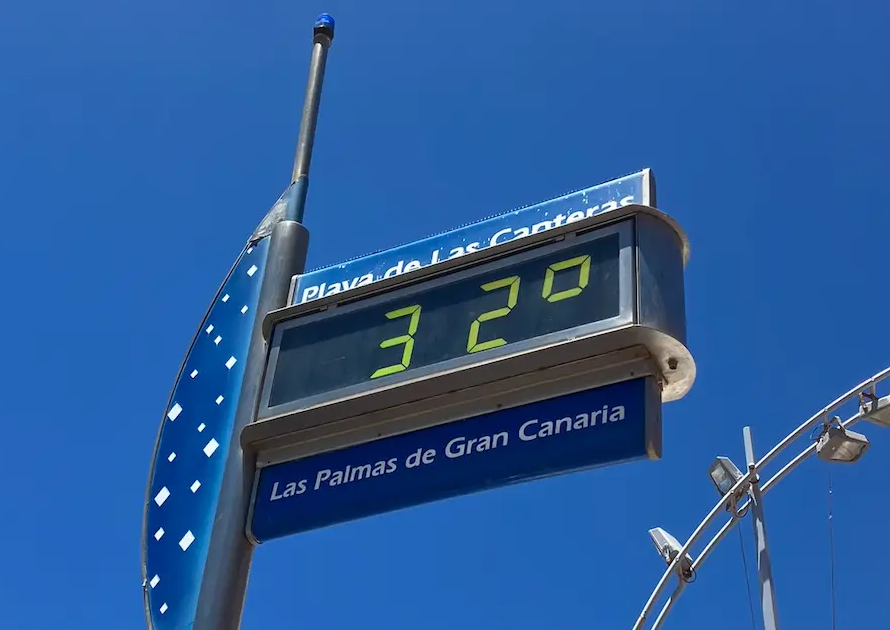
Forecasts, trends, sun and tide times, surf reports, moon phases and the lingo to chat about 'el clima' like a local
Find out all you need to know when in Las Palmas, or before you travel.
Realtime Weather
From Agencia Estatal de Meteorología / AEMET.
Calima Warnings
From Calima Canarias.

Weather Forecasts
AEMET is Spain's National Weather Agency (Agencia Estatal de Meteorología) and the source I trust most to know what's happening on the island.
 Agencia Estatal de Meteorología
I also consider AEMET the authoritative source of weather warnings:
 Agencia Estatal de Meteorología


We English-speaking folks love to chat about the weather, at home it's either too cold, too wet, or too hot and muggy as hell! All too rarely do we find days sitting comfortably in the Goldilocks Zone of "aaah, that's just lovely".
In Las Palmas the cool days are still warm, and the hot days are still cool thanks to the oceanic winds, but sometimes the clima there gets a little loco!
That doesn't mean it never gets cold, or insanely hot, but the city's location, resting just north of the island's mountainous highlands, and surrounded by the Atlantic Ocean, Océano Atlántico, gives it a nice balance of cloud and clear skies all year round.
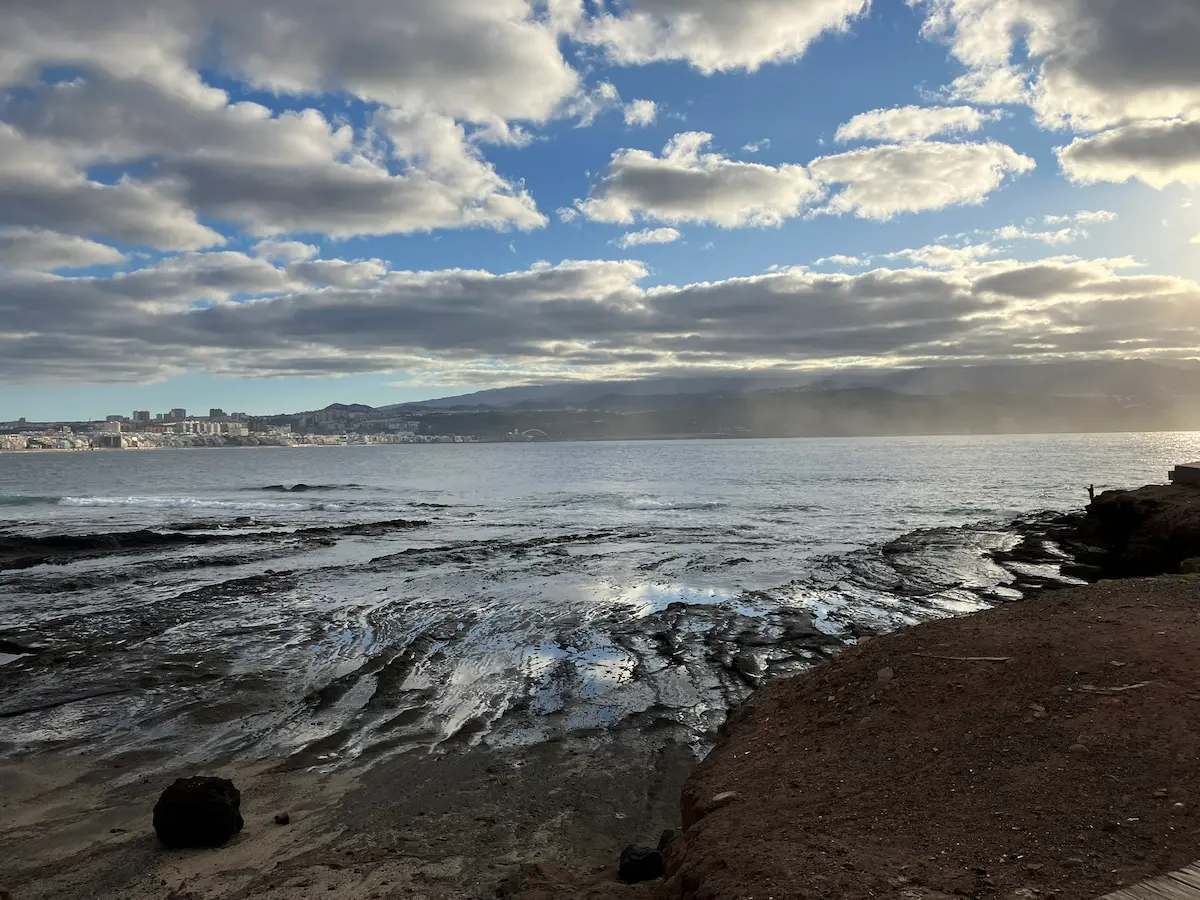
Annual Weather Trends
I guess what you really want to know is when is the best time to come?
Tourism Score in Las Palmas de Gran Canaria
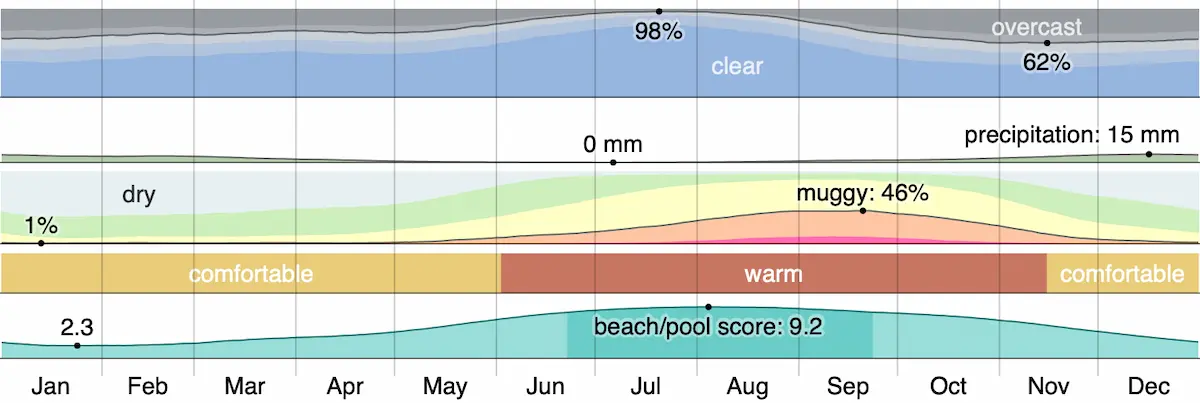
The tourism score favours clear, rainless days with perceived temperatures between 18°C and 27°C. Based on this score, the best time of year to visit Las Palmas de Gran Canaria for general outdoor tourist activities is from early May to early September, with a peak score in the last week of June.
The Beach and Pool Score
The beach / pool score favours clear, rainless days with perceived temperatures between 24°C and 32°C. Based on this score, the best time of year to visit Las Palmas de Gran Canaria for hot-weather activities is from late June to late September, with a peak score in the first week of August.
Citations from Weather Spark.
Some people visit because it's hot to them, others visit because it's cooler, mainlander Spaniards like the islands to cool down, Scandinavians like them to warm up.
I knew a girl from the Sahara who would sit on Playa de Las Canteras📍 in a body-warmer saying she was "cold" when it was 28°C or more!
The annual charts and figures will help you work out what time of year is best for you to visit. I've been there on days throughout each season, and have seen all four seasons rolled into just one day!
Weather By Month
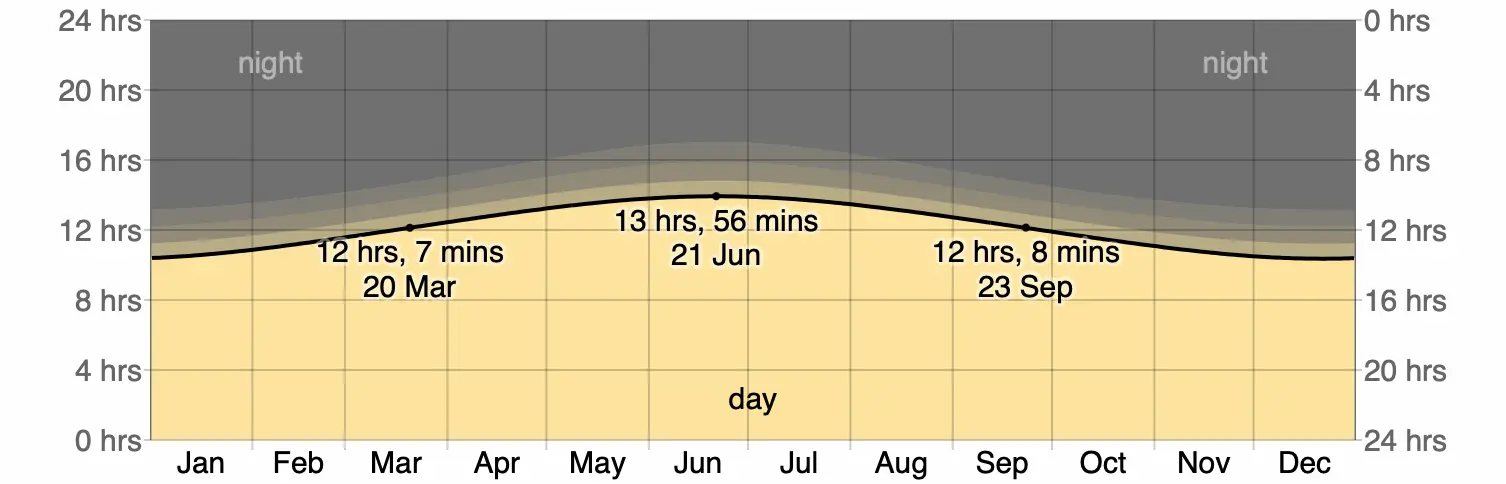
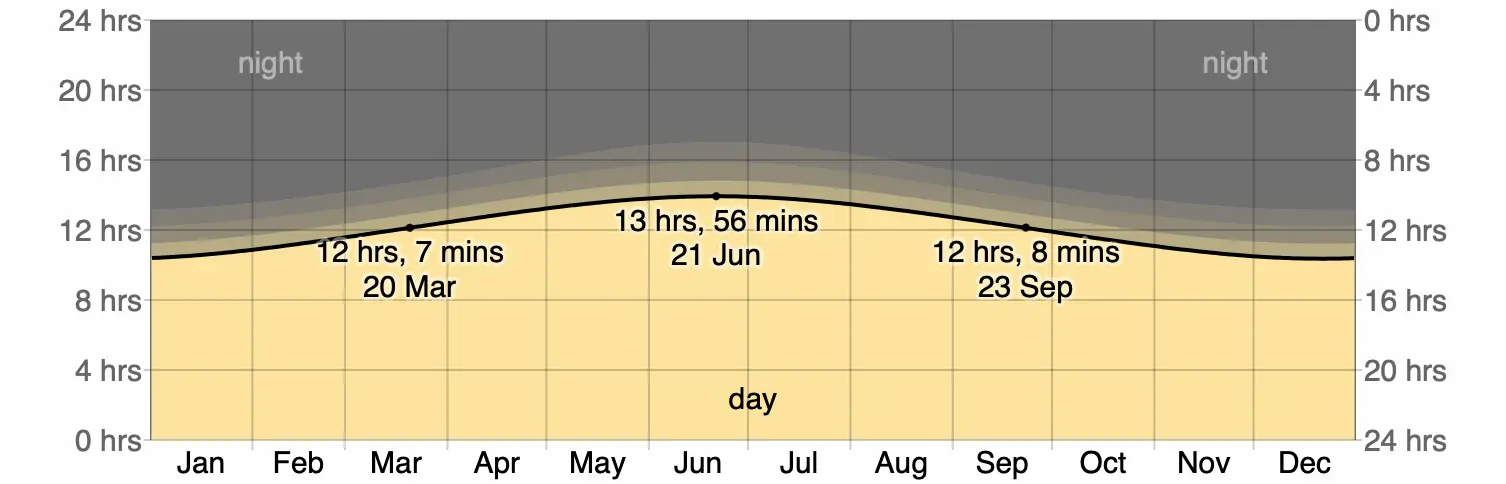
Hours of Daylight and Twilight
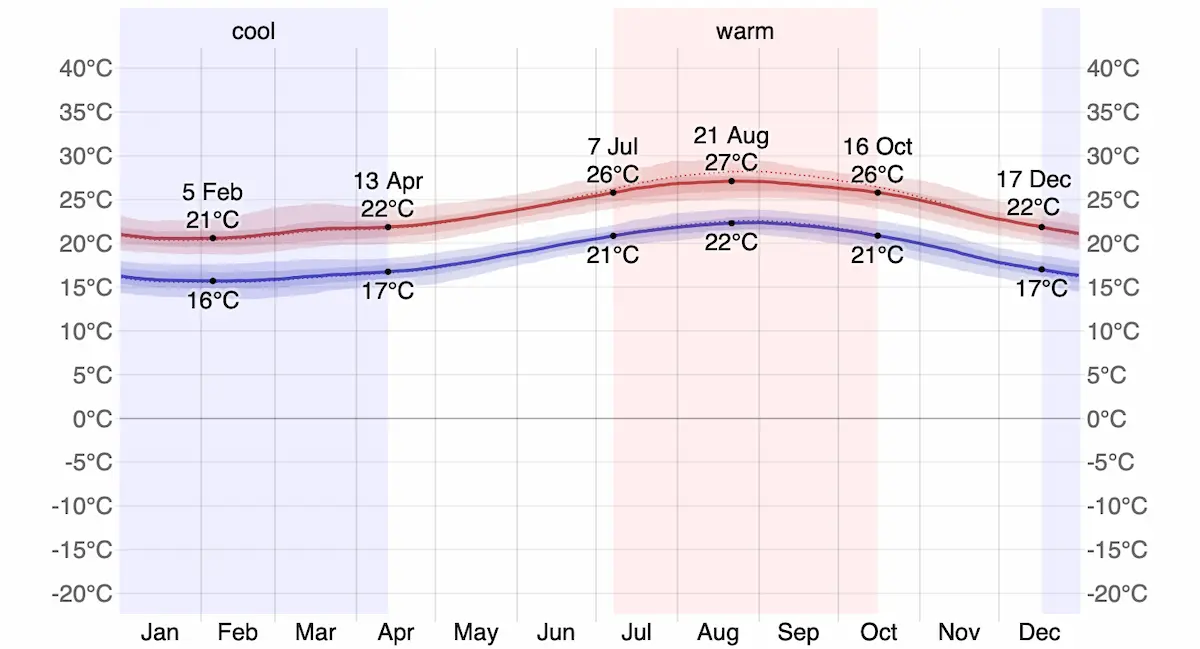
Average High and Low Temperature
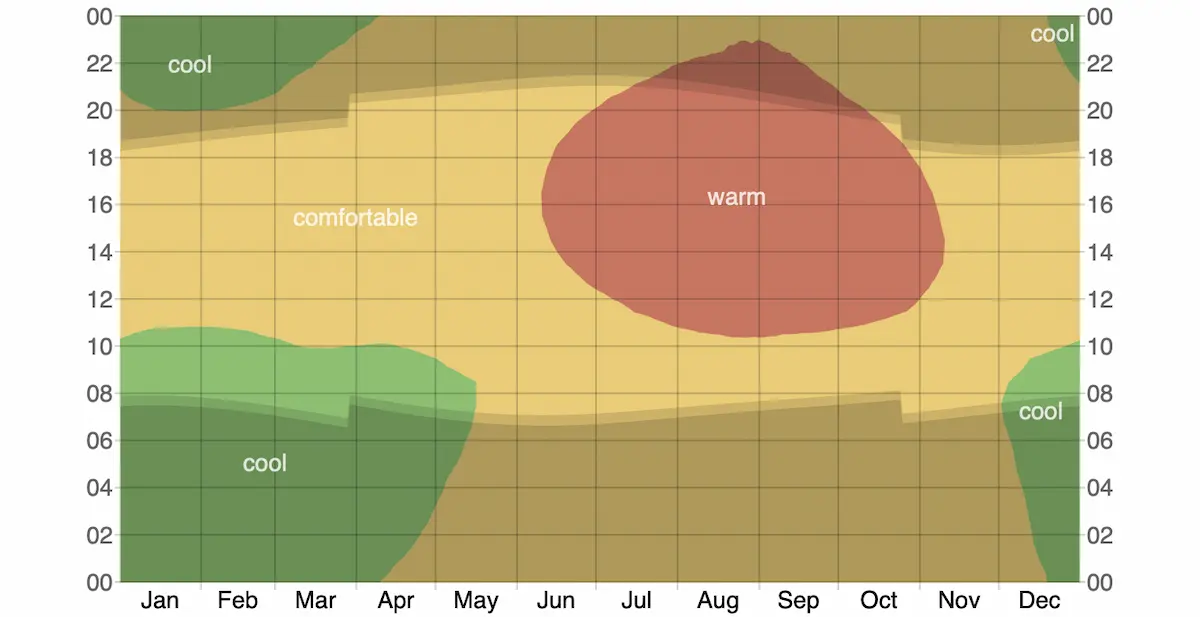
Average Hourly Temperature
Different monitoring locations give different results
Yeah, I'd normally file that statement under "duh" because it seems totalmente claro, but where your weather source gets their data matters, many reports come from LPA, Aeropuerto de Gran Canaria📍, a good few kilometres down the coastline, and that's got its own micro-climate, just like the city and many other places on the island.
Maspalomas and Playa del Inglés are very different worlds from Las Palmas, in terms of weather, culture and vibe. Make sure you're getting your weather about the right place, don't come to the north expecting temperatures from the south!
Apps, websites, temperature boards, take them all with a pinch of sal(t).
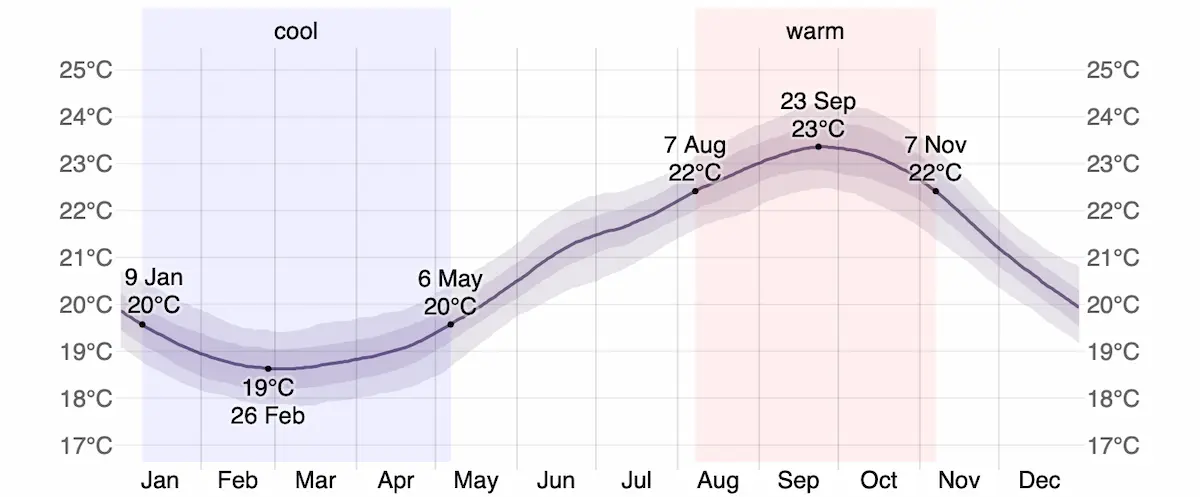
Average Water Temperature
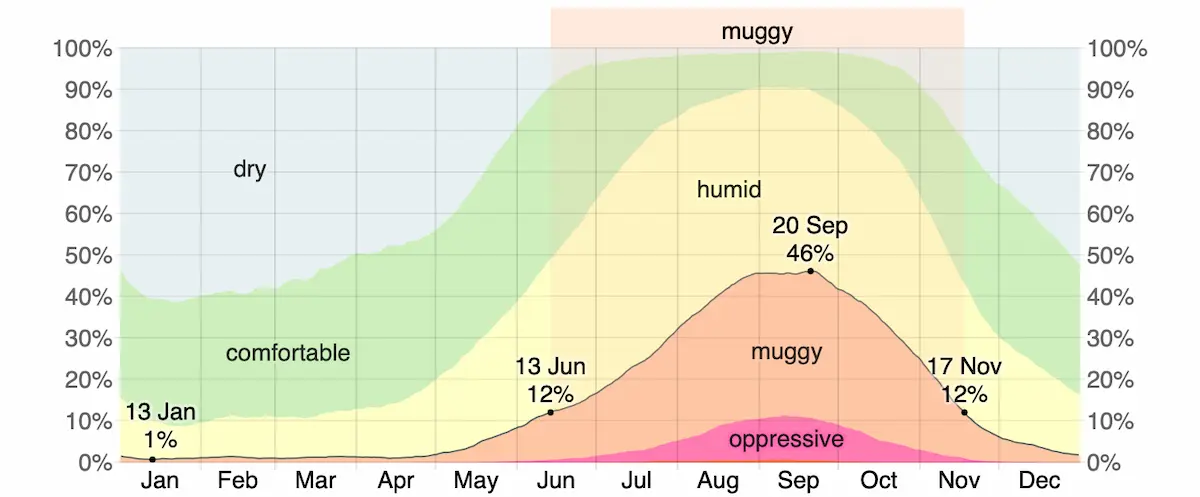
Humidity Comfort Levels
Cloud Cover
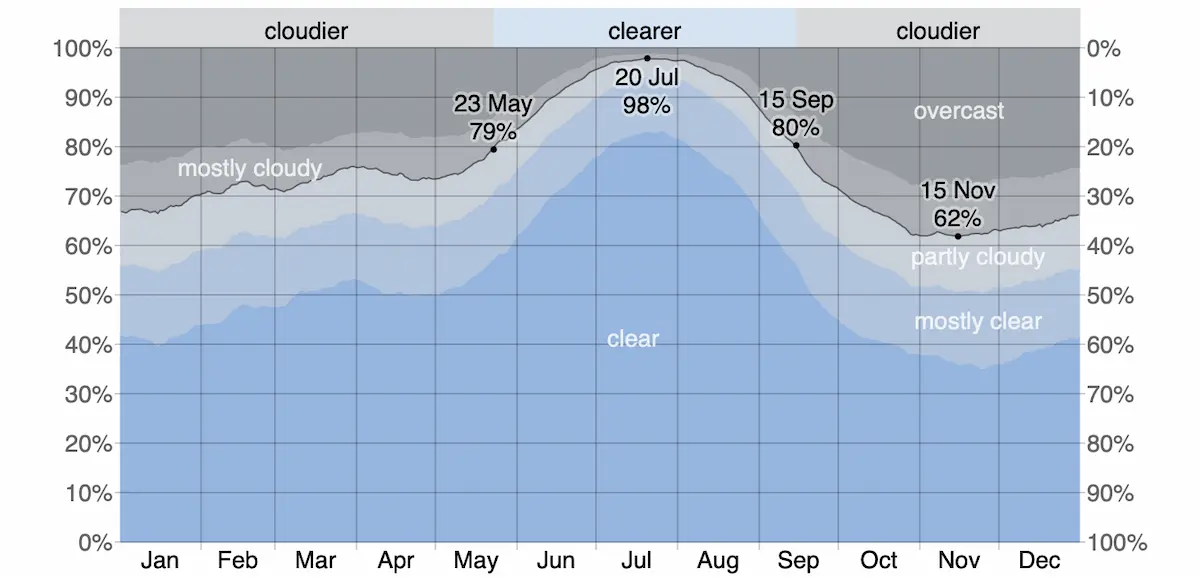
The typical weather vibe in a nutshell
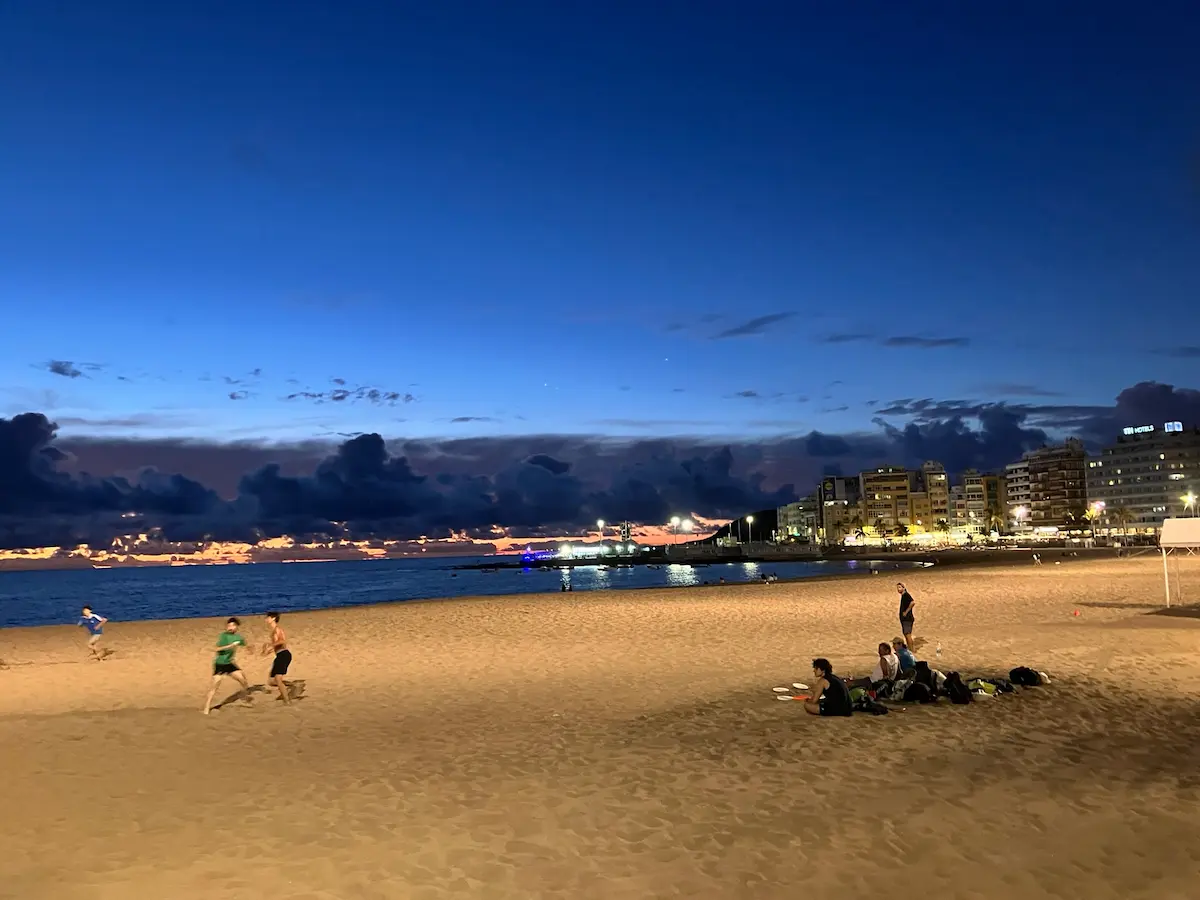
The city tends to be cloudier in the morning, usually clearing by afternoon to reveal blue skies with the odd patchy wisp of cloud, afternoons can be so bright you've got to get the shades out, and evenings tend to have a lovely sundown glow to them.
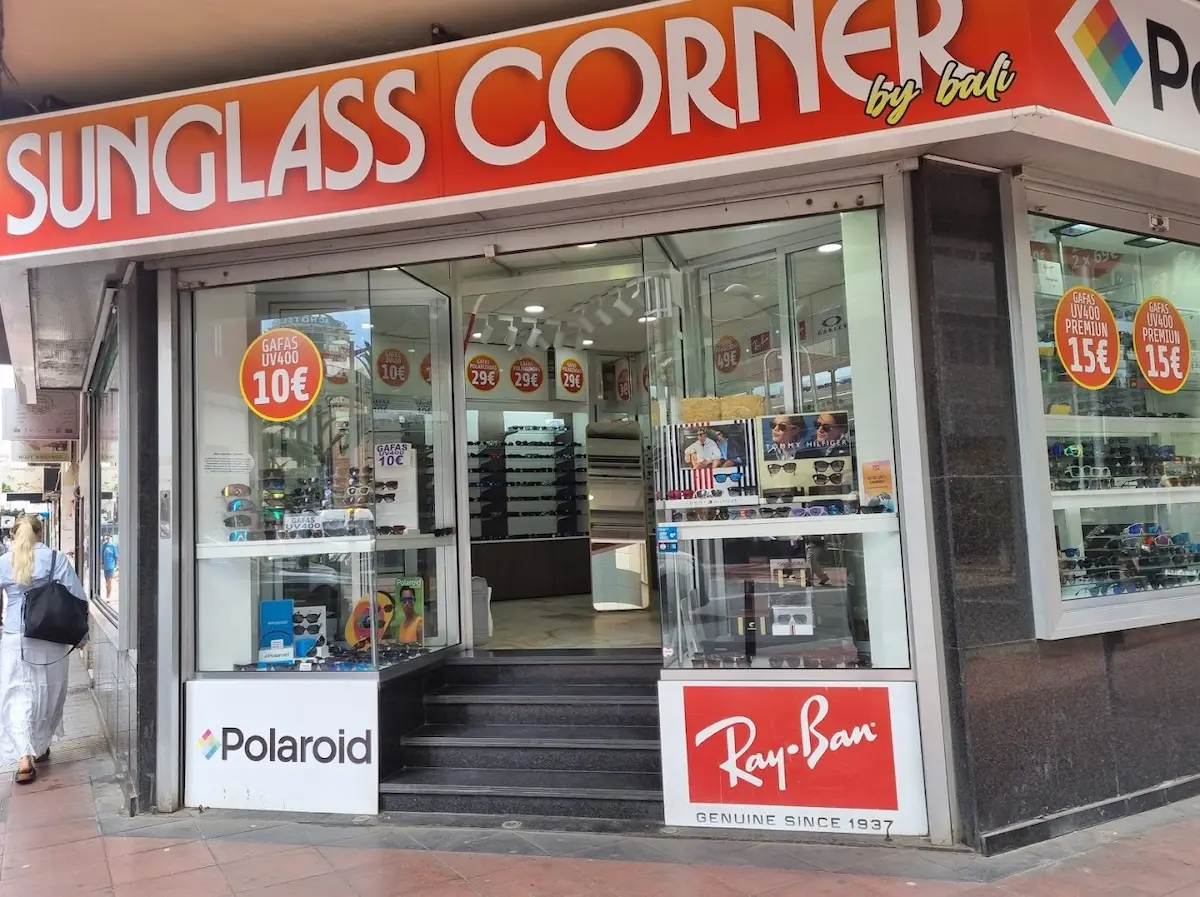
Need some cool UV blocking shades?
Go see Bavish at Sunglass Corner📍 on the corner of Calle Thomas Miller📍, (toe-mass mee-yer) and Calle Luis Morote📍. Tell him Andy says hi. (Not-sponsored)
Your mileage in la ciudad may vary... I've known it be cold, hot, baking, dusty, wet, windy and wild, and all of that was in a 24 hour period.
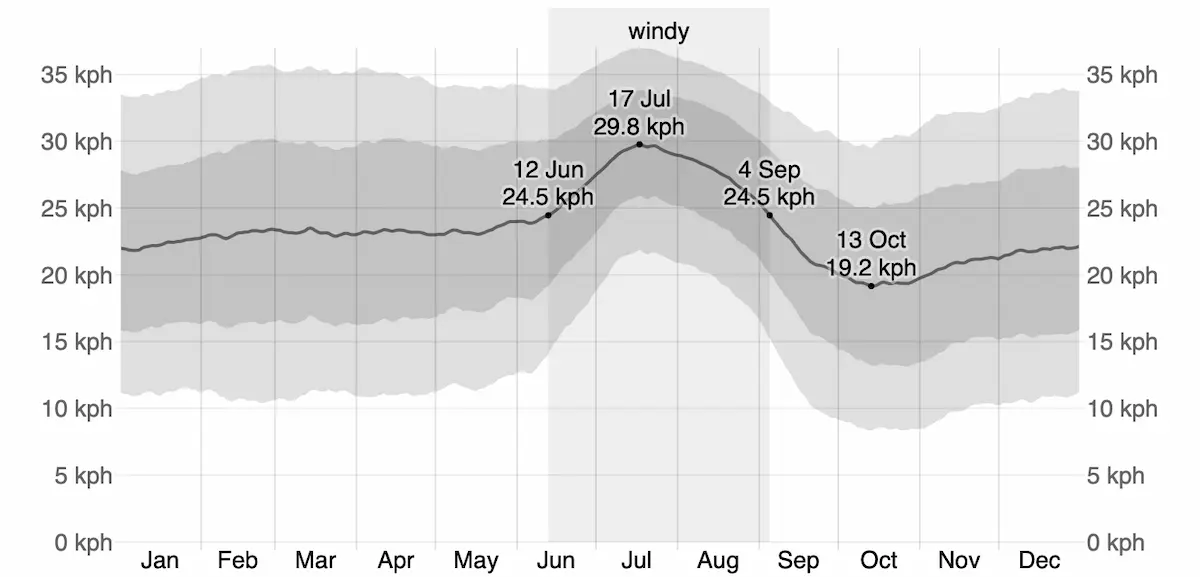
Average Wind Speed
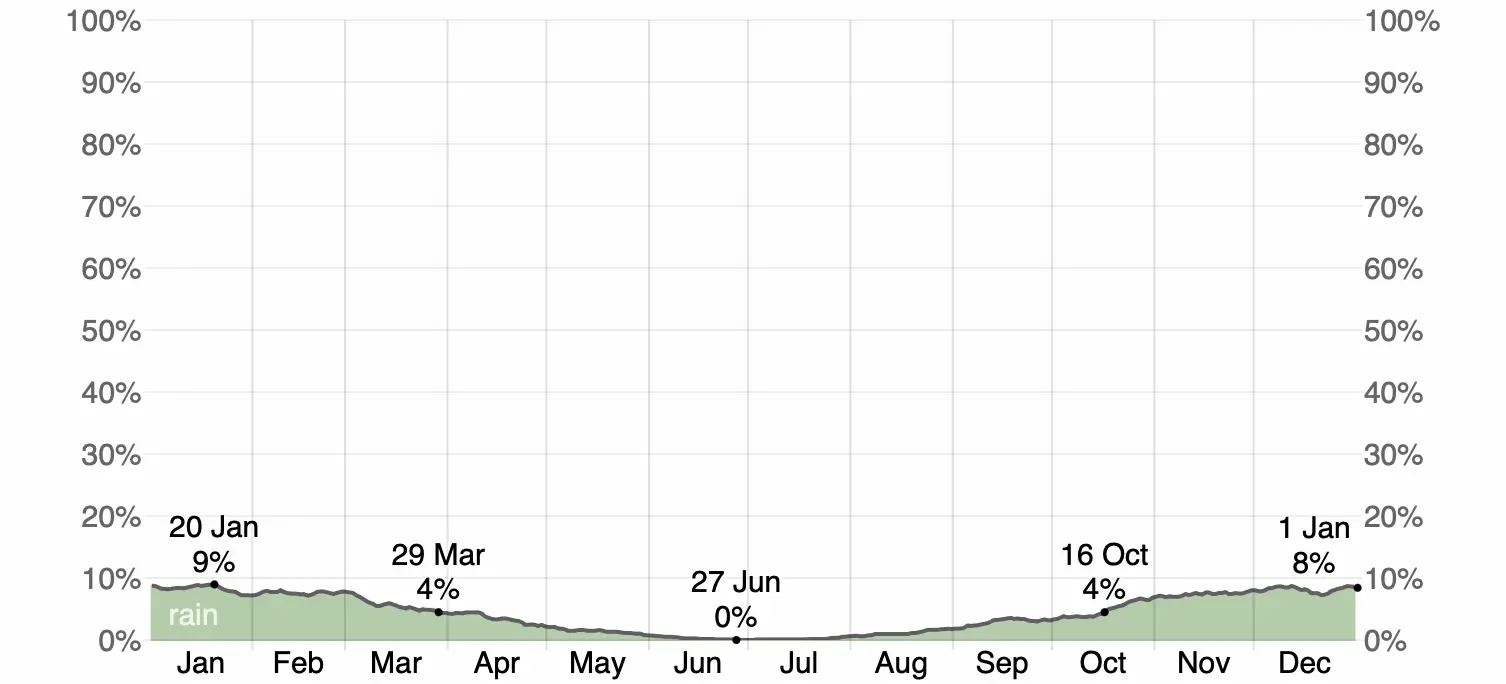
Daily Chance of Precipitation
Canario rain is warmer and can be fun!
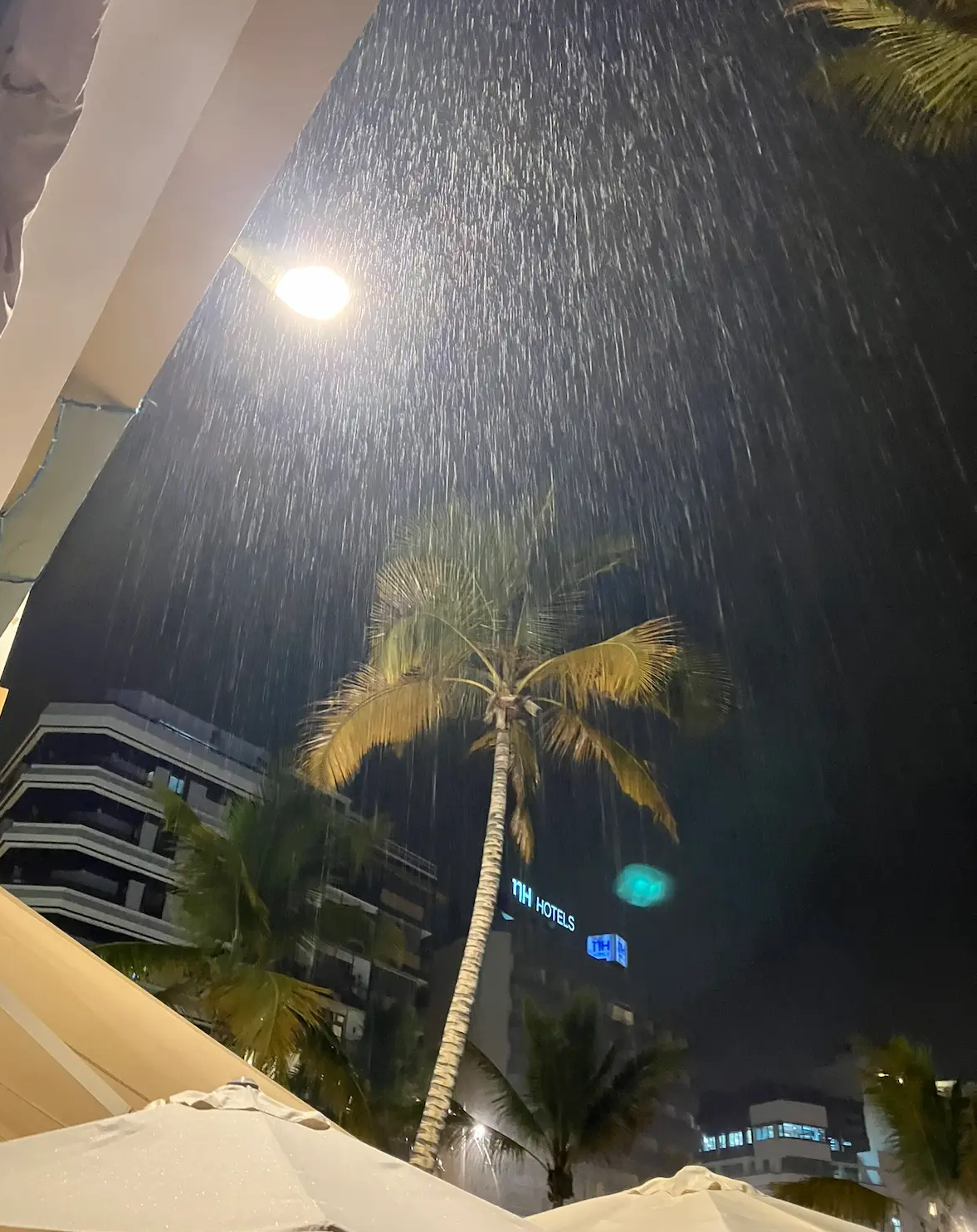
Yes, of course it rains. Sometimes it's the lightest of mists that dance through the air, other times it's absolutely chucking it down and there's panic on Paseo de Las Canteras📍 as serving staff batten down the hatches, guiding diners indoors and rescuing dishes from the downpour.
Las Palmas is a city of contrasts. I've seen terror on the faces of locals rushing around to patch up leaks in their crumbling, weather-beaten homes, and I've joined in with them in laughing it off, knowing full well, like all things in life, the rain passes and we've just got learn to dance in it.
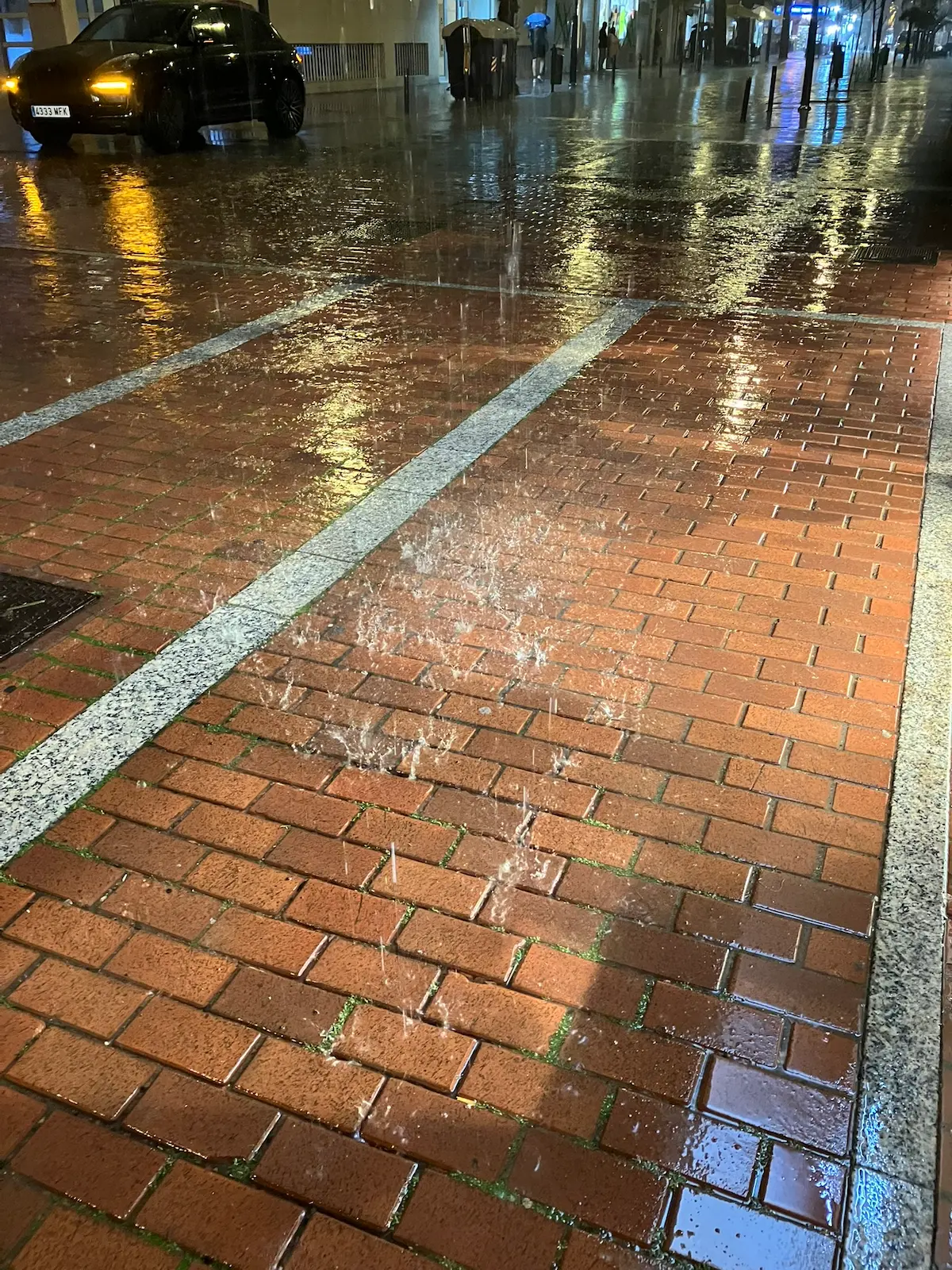
When it really hammers down it's a vibe. A smile from a stranger sheltering under the same storefront as you, becomes a friendly nod on an evening stroll along the beach the next night.
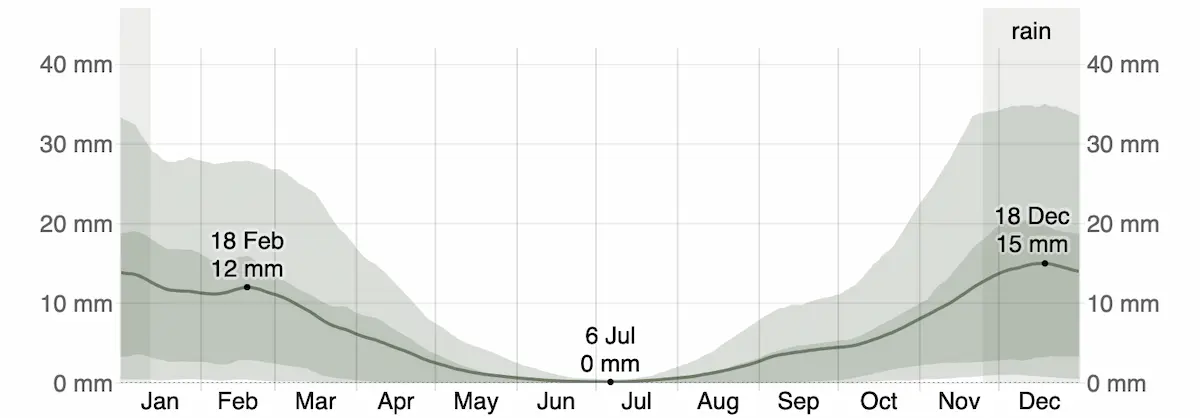
Average Monthly Rainfall
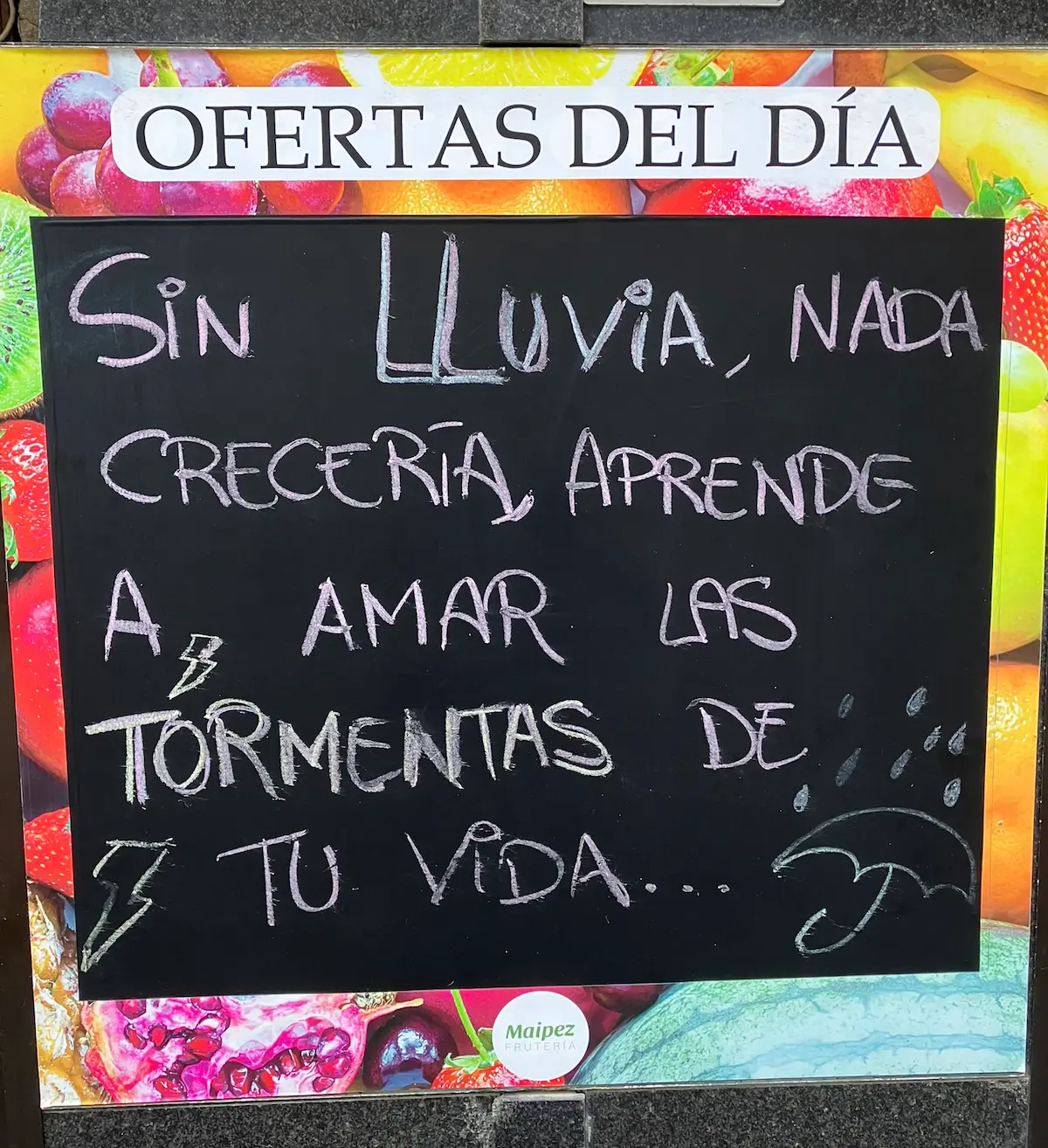
Learn to love the storms in your life!
This is from a wet weekend in January '26, it sums up the Canario spirit.
Local Lingo: El Clima en Las Palmas
It's one thing chatting about the weather in English, what about con un poco de español? What about with a little Spanish?
- Lluvia = rain.
- Caliente y frío = hot and cold.
- El viento = the wind.
- Ventoso = Windy.
- Calor = Heat.
- Despejado = Clear
- La Calima = Saharan dust storm.
- La Calufa = oppressive muggy heat.
- Panza de Burro = "The donkey's belly" / an overcast sky.
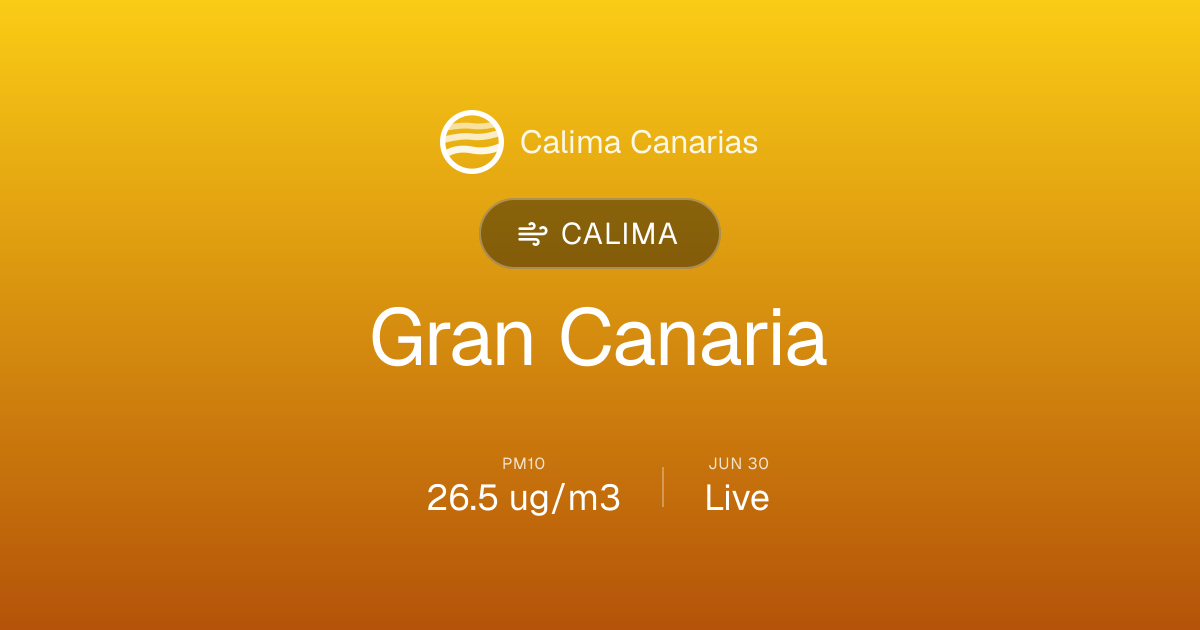
Calima
Don't trust the UK media when they're talking about catastrophic calimas!
I've seen them try to sensationalise the totally natural atmospheric haze that blows onto the city, it's carrying Saharan dust and sand. That then leaves a light layer of fine particles on the streets, cars, bikes, laundry, everything...
They're not world ending and they've been happening forever.
Las Palmas was mainly sand dunes a hundred years ago, and if everyone left today, given another hundred years it'd be sand dunes again!
What is a calima?
Calima is the Spanish word for atmospheric haze. In the Canary Islands it refers to suspended Saharan dust that causes hazy skies, elevated PM10 and reduced visibility. Episodes are most frequent from January to March.
How long does it last?
Episodes typically last 3 to 5 days. Mild episodes clear in 1 to 2 days; intense episodes can persist up to a fortnight. Intensity peaks in the first 1 to 2 days before gradually improving.
What about health effects?
Elevated PM10 may cause dry cough, eye and throat irritation, or breathing discomfort. People with asthma, COPD, heart conditions, children and the elderly may be more affected.
Where does the dust come from?
Calima dust originates in the Sahara Desert, primarily Mauritania, Western Sahara, and Mali. The Saharan Air Layer carries fine particles westward across the Atlantic on easterly to northeasterly winds, reaching the Canaries within 1 to 4 days.
Citations from Calima Canarias:

 Calima Canarias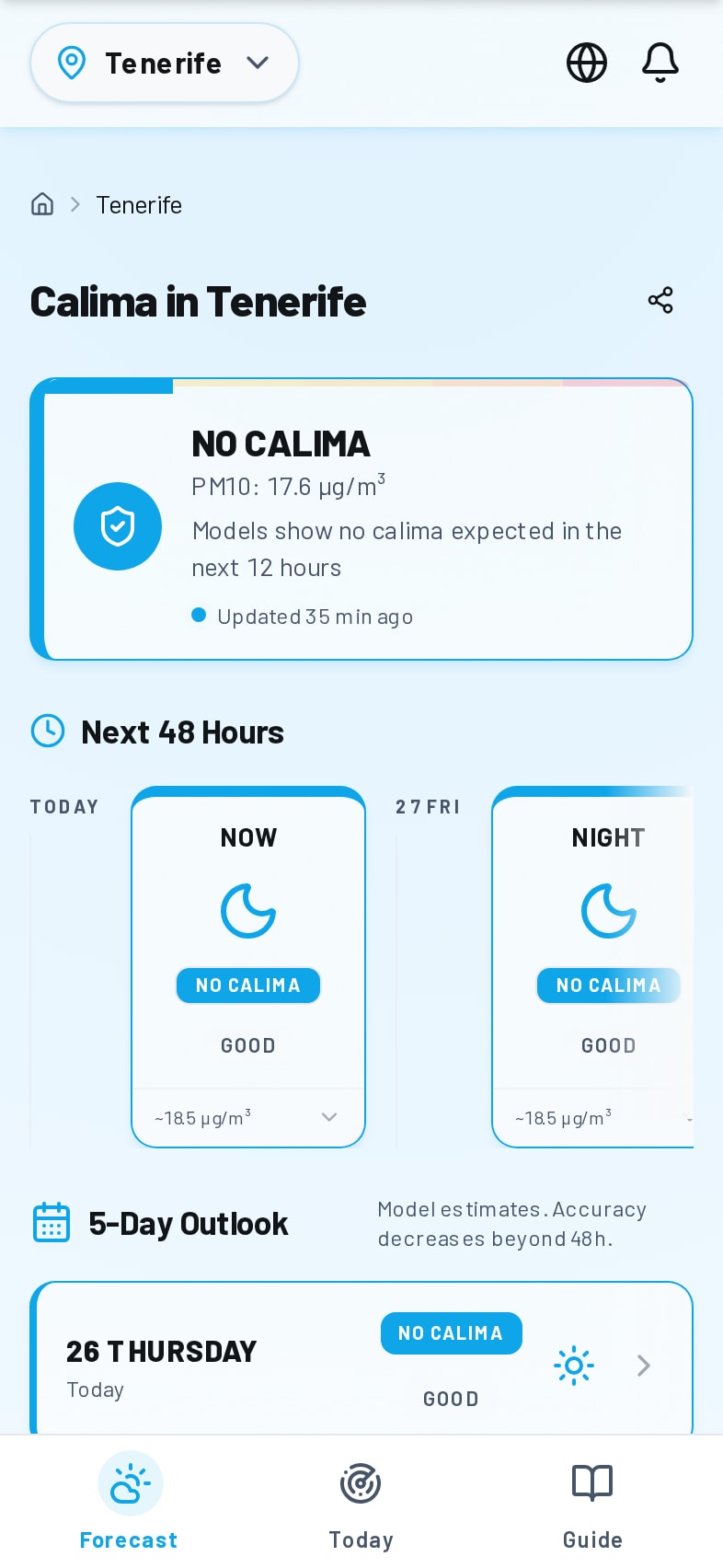
Make sure you drop it in the tray at airport security screening, along with your phone, keys and loose change.
Inhalers have a habit of making the scanners alert your bag, which leads to it getting swabbed. They're mainly looking for explosives, but it can be a heart-stopping moment when you think you're about to get pulled aside, strip-searched, and probed by the gloved finger of a customs official...
UV Index and Skincare
Remember you're geologically on the African tectonic plate when in Las Palmas, and you're closer to Africa than you are Europe.
The Government is Spanish with local autonomy, the vibe is international, it's like Europe, but it's not like Europe, it's like Spain but it's not like Spain. The sun hits different there.
Avoid the "I felt cool but got sunburnt" trap.
Just because you feel cool from the ocean breeze, it doesn't mean that the UV is blocked, and it certainly doesn't make you immune from burning!
 Agencia Estatal de Meteorología


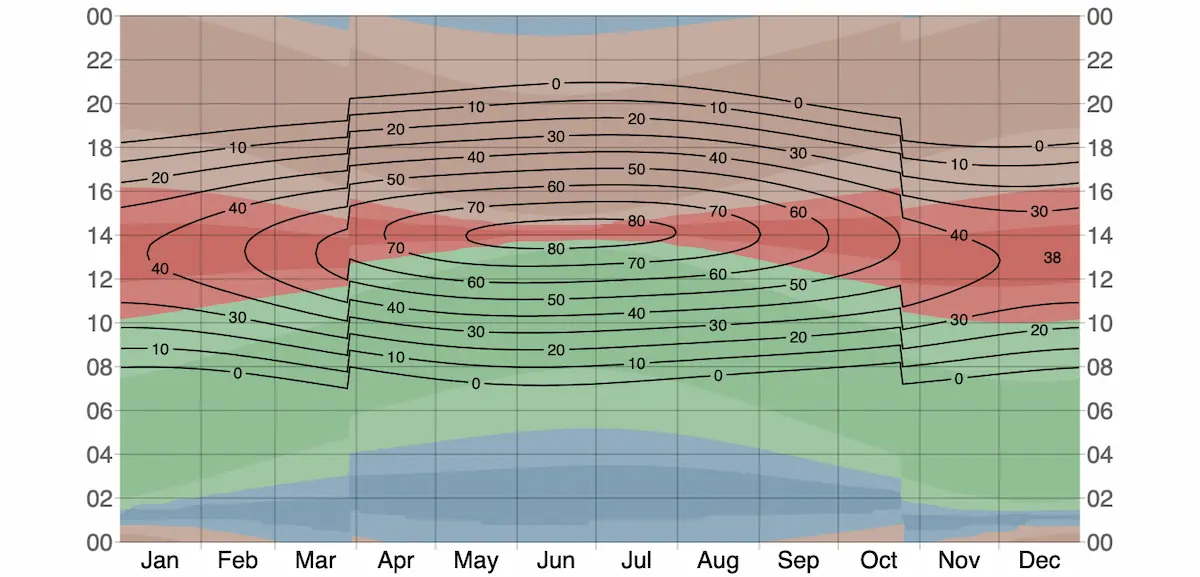
Solar Elevation and Azimuth
Suncream or sunburn? Don't be a guiri...
I've done the "oh, it's okay, I'll just stick to shaded spots and not bother with suncream" thing before and nah, it's not a smart move. I've been burnt, it stings and you don't want that. Slap some sun protection on before you go out, and not as an afterthought.
Prevention really is better than treating it later, you can get a small tube of Factor 30 for about €8.00 from the Spars and SuperDinos in the city.
There's no excuse other than stupidity, don't be a guiri bobo, estúpido.
A bigger spray bottle of Factor 50 recently set me back €16.18 from SuperDino on Calle Luis Morote. For the price of a few café solos and a bocadillo o dos it ain't worth skipping.
Aloe Vera: natural aftersun skin care
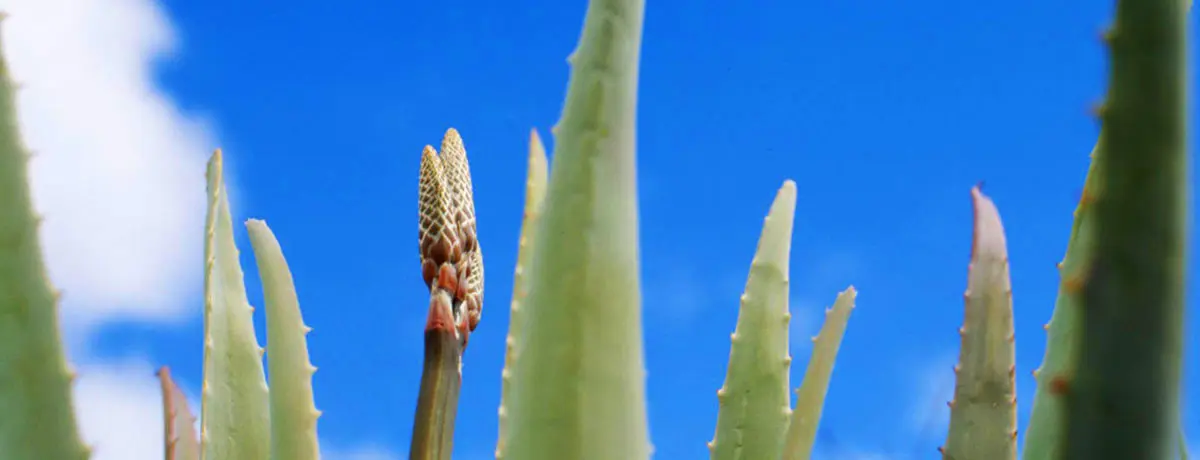
Aloe Vera grows all over the island and can be found through the city, it's great for soothing skin that's been exposed to a little too much sun.
Don't go picking it though, there are tonnes of shops on the Calles de Las Palmas where there are soothing Aloe gels and balms in the window. Go for one of those, you're supporting a truly local business, plus they're ready to go from the bottle.
Sunrise and Sunset Times
There's being in tune with nature, living more like an ancient Guanche in harmony with sunrises, sunsets and the times of the tides, then there's the thing you really want to know:
What time is best to take photos to make your friends, family and followers jealous?


Sunrise & Sunset with Twilight and Daylight Saving Time
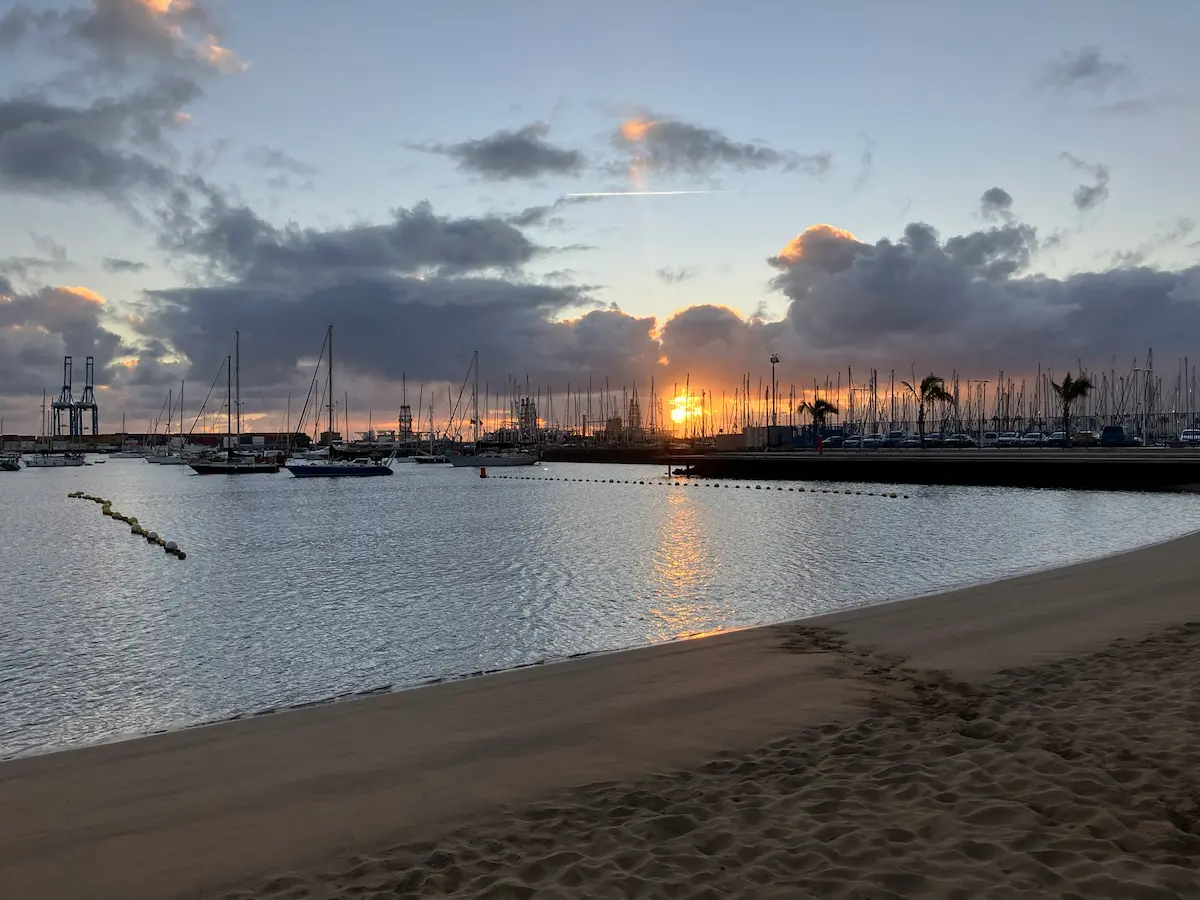
The sun rises on the port side of the city, there's great views along Playa de Las Alcaravaneras and Avenida Marítima which runs right next to the GC-1 motorway.
There's much less traffic at daybreak so you can take a chilled stroll or jog over there to soak up the vibes. Then maybe it's time for some breakfast churros?
The Moon

 About the editor
Tide Times and Surf Reports

 Ben Mondy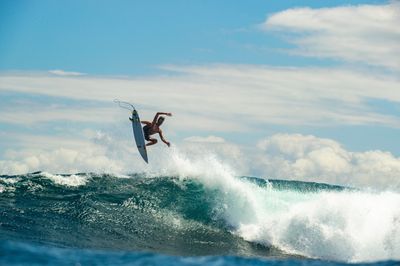
 Ben Mondy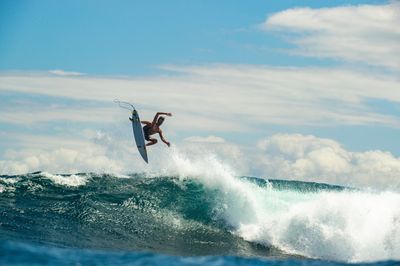
Graphic Credits
Thanks to Weather Spark for the charts and graphs featured on this page.