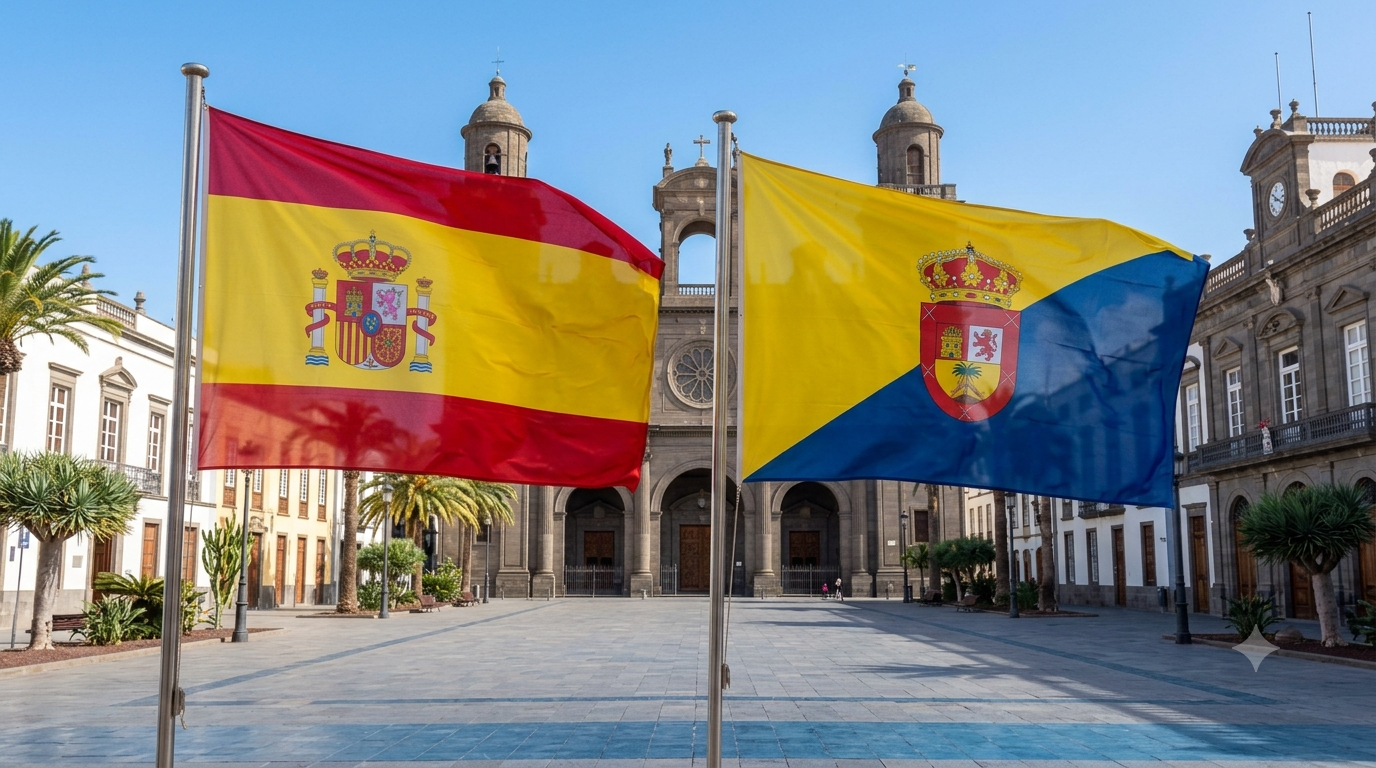
On Friday, July 31, 2026, Ayuntamiento de Las Palmas, the city’s council, unanimously approved the city’s membership in the Spanish Network of Cultural Capitals: Red Española de Capitales de la Cultura.
What does this mean for Las Palmas?
The city council and Spain’s Ministry of Culture will be working closer together, the council will be forming closer alliances with other Spanish cities and central government to help secure funding for the city’s bid to win Capital of Culture 2031.
The city aims to boost urban growth and innovation through arts, making sure such projects are available for all, and sustainable so they leave a long term positive legacy.
There are around 200 different arts projects planned for the city between now and 2031, and if another city wins the bid the projects are still taking place.
In recent weeks there’s been open air cinemas, several public participatory art projects in the city, damaged murals being repaired, new artworks appearing on old buildings, and even hundreds of naked people covering themselves in paint as part of an art project in Vegueta:
- Nude photographer Spencer Tunick brings Gran Spectrum human art to Vegueta
- LPA Estación returns to celebrate Gran Canaria’s culture, cuisine and heritage
- New mural by local artist Cayetano Martínez refreshes worn house on Calle Blasco Ibáñez
- ¡Vamos de cine! Open Air Cinemas to screen 20+ feature films in Las Palmas this July and August
- ‘Ciudad desde el Barrio’, a participatory urban art project in Las Alcaravaneras
- Isabel Torres mural under repair after vandals deface Las Palmas activist’s tribute with graffiti
That’s just in the last month. Expect much more to come.
While Las Palmas is heading up the bid, it’s an archipelago wide initiative that’s made up from artists, creative thinkers and cultural institutions that all share the same message:
- Remote regions can lead and inspire global cultural innovation
- Art is the platform to deliver the most important messages
- Creation and community go hand in hand
Who are the contenders for 2031?
“In 2031, two cities will hold the title of European Capitals of Culture”: – Citation: European Commission.
Two cities will win the award. One in Malta. One in Spain.
Victoria (Gozo) in Malta looks like it has secured its position as the only Maltese participant, but it still needs to submit a final bid for selection, and there are four Spanish cities which have been shortlisted for the title:
- Oviedo
- Cáceres
- Granada
- Las Palmas de Gran Canaria
The Las Palmas bid is called the Rebellion of Geography, Rebelión de la geografía. Just because it’s on an island doesn’t mean it can’t have global reach and influence, it always has had, going back to 1478 when Juan Rejón first set foot on the island, then Cristóbal Colón, Christopher Columbus followed in 1492 and history was made.
The geography of Gran Canaria made Las Palmas the bridge between Europe and America, the old world and the new. The cultural impact is far reaching: Cuba, Venezuela, South America. The rebellious spirit thrives, it dances, paints, sings and celebrates what makes it unique.
The winner will be announced in December this year.
A bigger bid: moving beyond the beach holiday stereotypes
In the late 50s Franco’s economic plans had left Spain a weakened economic state and he realised tourism was essential to keep the country on its fiscal feet.
Tourists had been coming to Las Palmas for decades, but modern tourism first opened up in city back in the 1960s when hotels like Bull Astoria were built.
The Spanish used the slogan “Spain is different” and attracted people with dreams of oceans, beaches and suntans.
Today Bull Astoria is undergoing a multi-million Euro refit, it’s changing name to Bull Collection Canteras, and getting ready to be a premium destination for 2031.
Instead of targeting pure holiday makers the Canario owned hotel chain is upgrading their business and sporting facilities to entice a different, more culturally enriched demographic.
The vibe is shifting, Las Palmas is so much more than somewhere to lay a beach towel and soak up the sun.
Spain is still different, but rather than inviting people to just come on holiday and enjoy the weather, the message now is different:
- It’s not just weather: it’s history, culture, music, art and cuisine.
- It’s more than paella and sangria: they’re not even Canario!
- Don’t just come for 7 nights, immerse yourself for longer.
- It’s not just a place to see, it’s a vibe to immerse yourself in.
The message has gone from “Spain is different” and you should come have a look to “Spain is different” you should come and give this way of life a go, it’s cool and you might really like it!
The old emphasis was to visit – the new focus is to live it.
What happens in the winning city?
Money flows into public projects, businesses and social ventures.
I had a digital business and a small team of staff that was based in Liverpool back around 2003 when it was announced that Liverpool had won Capital of Culture 2008. It opened the doors to funding opportunities we otherwise wouldn’t have been able to dream of.
We were a ringtone and mobile content provider serving the public and working with mobile networks, newspapers and media partners.
The UK Government and Department of Trade and Industry were throwing money at Merseyside businesses, left right and centre.
We were offered £250,000 from the public’s purse, as long as we could bring in another £250,000 from our own contacts, and we could.
The DTI were handing out grants and loans like candy, Chamber of Commerce and other business networking groups rejoiced, incentives like ICDC, the International Centre for Digital Content, all made bank .
We could have gotten half a million pounds into debt, opened a data centre in the old Marconi building, signed deals with record labels and become a leading name in music downloads using other people’s money.
We ultimately decided getting half a million quid into debt probably wasn’t going to end well. We opted out and I got out of Liverpool.
Liverpool: how did it work out for them?
Within hours of Liverpool being announced as winner of Capital of Culture back in 2003 house prices started to rise.
Brilliant news if you’re on the property ladder, it looks great on a balance sheet, but for those trying to take the step into home ownership it made it more challenging.
A 95% Youth Mortgage Scheme has recently been approved throughout the Canary Islands which will enable those between 18 and 40 to mortgage a property and take advantage of the positive equity, should a win be announced.
It’s a good time to buy property in Las Palmas. The prices will not be going down if the city wins the award!
Back in 2003, a burnt out shell of a building in the run down, socially deprived, drug and prostitution riddled Kensington area of Liverpool went from a listing price of £15,000 to about £48,000.
I’ve just taken a Google Street View virtual stroll past around my old neighbourhood, it still has boarded up houses and the vibes of an area that needs more than a glossy badge to hide its social wounds.
The net gain for city was vast, over £4 billion in combined public and private funding was invested, there’s a new shopping centre, Liverpool ONE and the city got a new arena, the Echo Arena & Convention Centre.
Some areas underwent renovation, but the promised public transport upgrade never happened and the detrimental impact of the win was felt immediately by those members of the public who were seeking homes:
- There was an influx of buy to let investors hiking prices.
- Rents in the city went up as demand soared.
- Property prices went through the roof overnight.
Over twenty years later, what’s it like? Upper Stanhope Street and Kensington are both still rough, they might have knocked down some old buildings that prostitutes used to trade behind on a night, the new builds make the area feel safer and cleaner, but the working girls just shifted a few streets up. It’s still got the same problems it always had.
ICDC, the dream of an International Centre for Digital Content never materialised.
The money wasn’t spread out well, it didn’t do much to help the really rough areas, and instead went to polish what was already quite glossy.
In all, whilst the city did benefit, there was quite a large “cultural hangover” that many had to deal with.
Learning the lessons of winners past?
It seems that by introducing Youth Mortgage Schemes and planning for a long-lasting sustainable legacy, the city has learned some of the salient lessons that come from winning.
By planning over 200 arts events that will happen regardless of outcome the city appears committed to arts and culture no matter what, which in itself is a win for all.
Source: